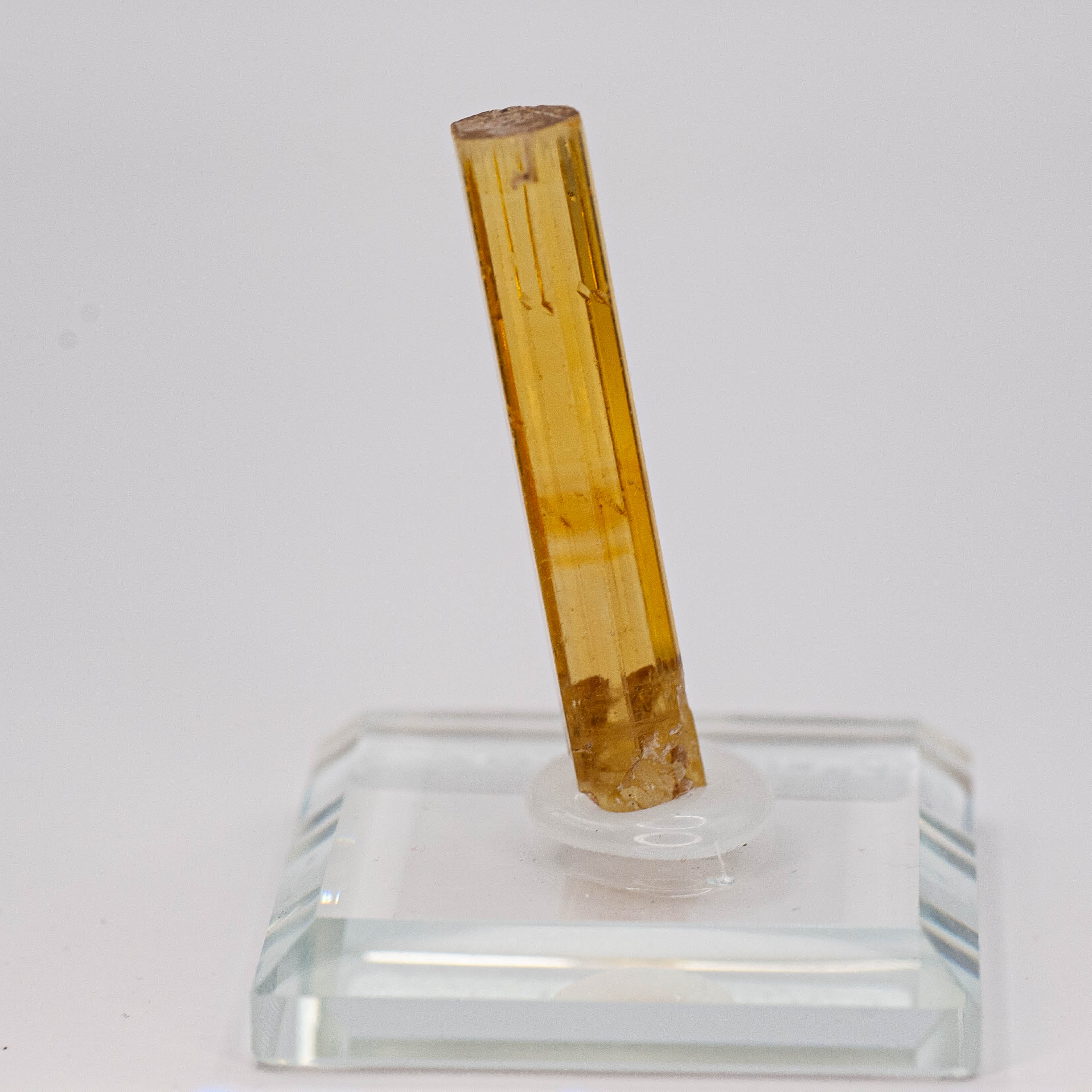
What is heliodor?
Heliodor, also called golden beryl, is the golden-yellow gem variety of beryl. It is a variety name rather than a separate mineral species, so the underlying chemistry and crystal structure are those of beryl. Its clear yellow prisms make heliodor a memorable collector and gem material.
Mineralogy and structure
Beryl is a beryllium aluminium cyclosilicate with the ideal formula Be3Al2Si6O18. It crystallises in the hexagonal system and commonly forms six-sided prisms. With Mohs hardness around 7.5-8, it is comparatively durable, although fine terminations and matrix associations still require careful handling.
Colour and appearance
Heliodor ranges from pale lemon yellow to rich golden yellow, sometimes with a greenish cast. Colour, transparency, zoning and termination quality should be recorded for each specimen. Colour in beryl varieties can also be affected by treatment, so a product description should distinguish confirmed natural colour from material of uncertain history.
Formation and localities
Heliodor forms principally in granitic pegmatites and can also occur in hydrothermal environments. Historic and important sources include Namibia, Brazil, Ukraine, Madagascar, Nigeria and the United States. A confirmed locality is more useful to a collector than a broad country-level attribution.
Use in collections
Collectors value clean transparent prisms, balanced golden colour and well-documented locality. A heliodor crystal is best displayed with its long axis supported, protecting corners and terminations from knocks.