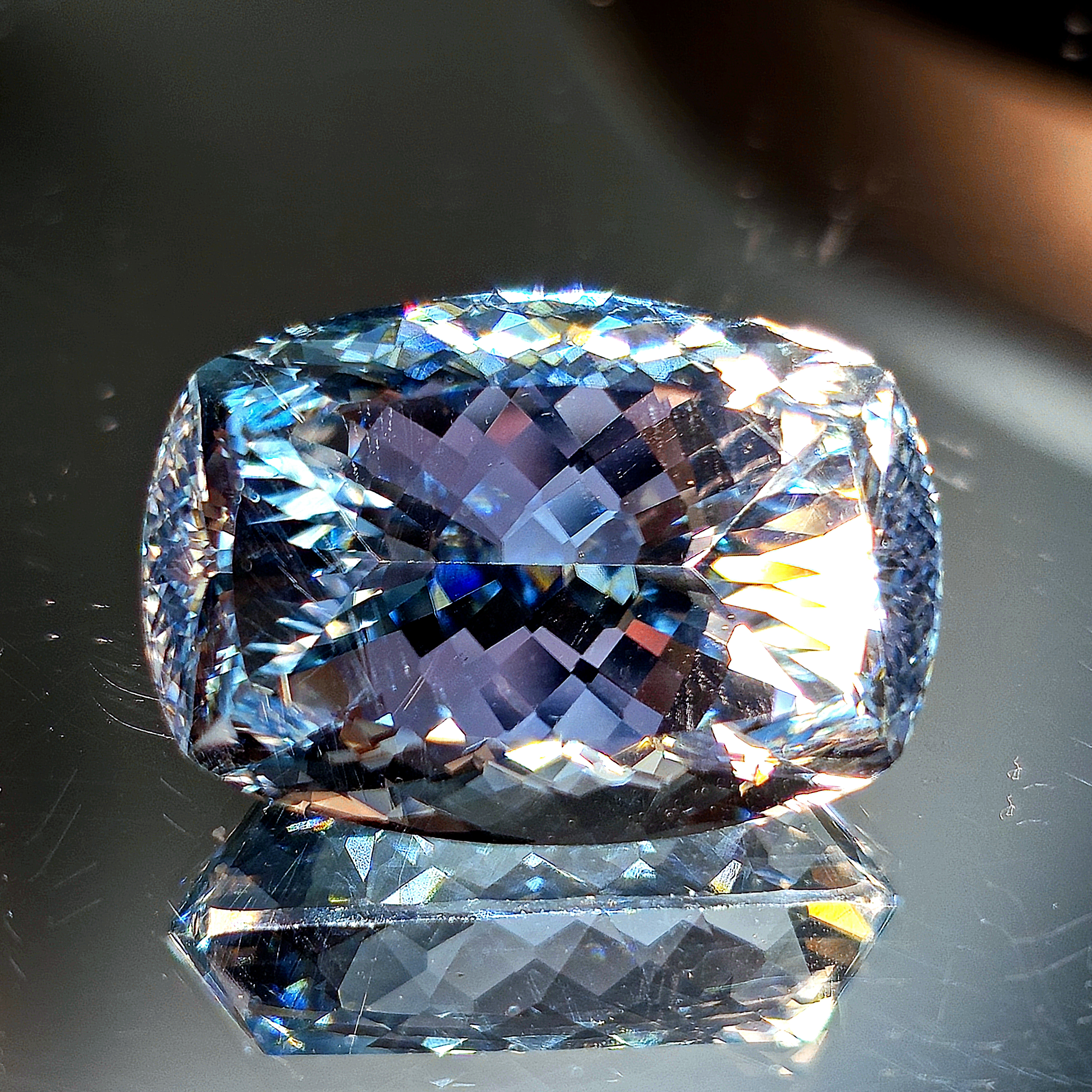
What is topaz?
Topaz is an aluminium fluorosilicate mineral best known for its hard, well-developed crystals and gem use. Natural topaz can be colourless, blue, yellow, golden, pink, orange or brown; a specimen should be described by its observed colour rather than by a trade name alone.
Mineralogy and structure
Topaz crystallises in the orthorhombic system and typically develops elongated, striated prisms. With Mohs hardness 8 it is harder than quartz, although its perfect basal cleavage means that a sharp impact can still split a crystal.
Colour and appearance
Many topaz crystals are colourless to pale blue or yellow, while rarer pink, orange and red material is especially sought after. Transparent crystals show a bright vitreous lustre. Natural colour zoning, termination shape and matrix association all add character to collector specimens.
Formation and localities
Topaz forms in fluorine-rich granitic pegmatites, greisens and high-temperature hydrothermal veins. Classic sources include Ouro Preto in Brazil, the Ural Mountains in Russia, Shigar Valley in Pakistan, and pegmatite districts in the United States and Mexico.
Use in collections
Clean terminations and large transparent crystals are prized by collectors. Because topaz combines high hardness with a distinct cleavage direction, specimens are best stored with support rather than loose among harder pieces.