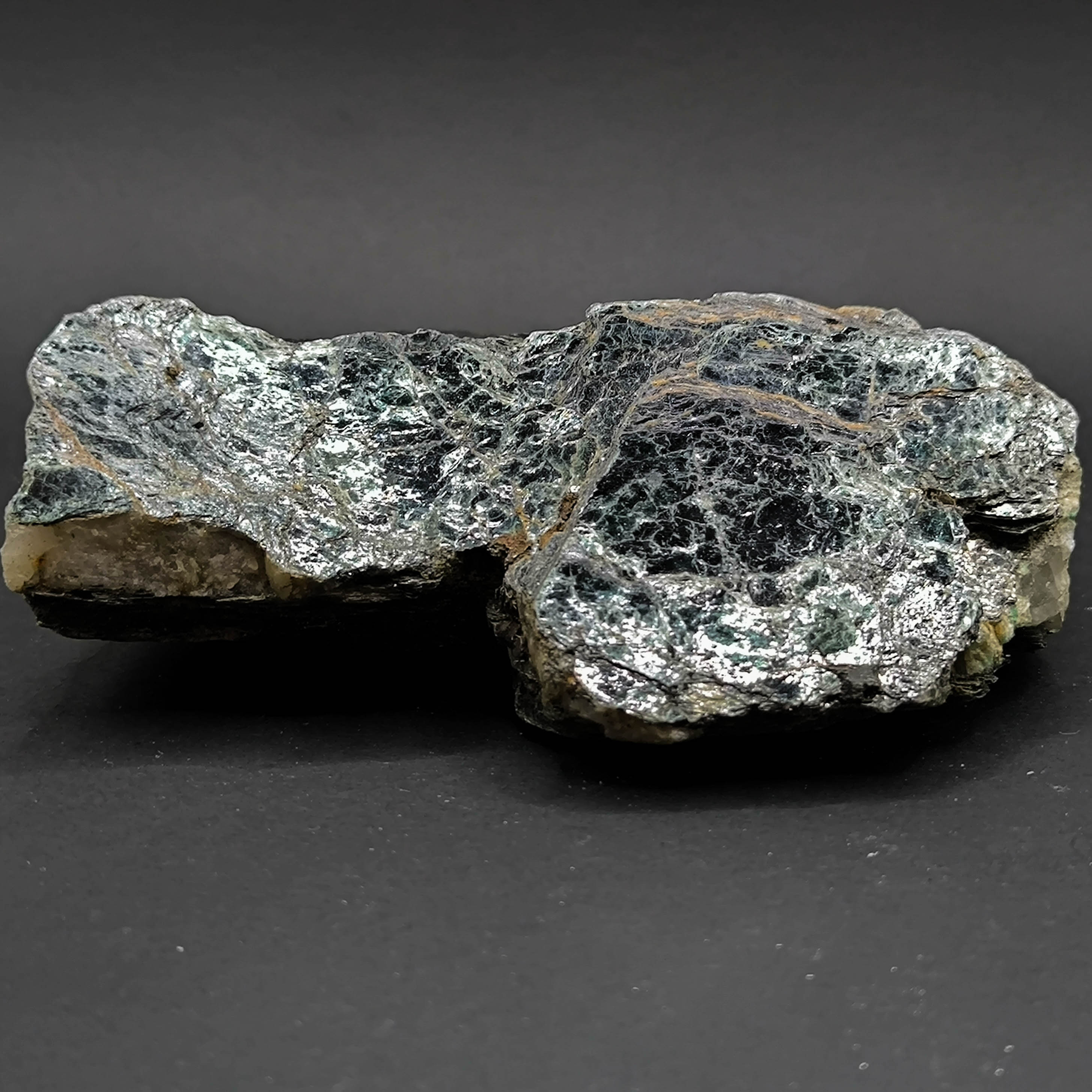
What is Phlogopite?
Phlogopite is a magnesium-rich mica recognised by elastic sheets, golden-brown colour and formation in ultramafic rocks, marbles and pegmatites.
Mineralogy and crystal structure
Reference formula: KMg3AlSi3O10(F,OH)2. Phlogopite is a monoclinic layered silicate with strong basal cleavage. Fluorine and hydroxyl substitutions change colour and stability, while mica books can flex without breaking. Phlogopite is classified with silicates and has a monoclinic crystal system. Typical hardness is 2–3 on the Mohs scale and specific gravity is approximately 2.7–2.9.
Colour, lustre and habit
Typical colours include brown, golden, yellow, reddish-brown. The usual platy, foliated, book-like habit and vitreous, pearly, sub-metallic lustre help describe a specimen, but colour alone is not diagnostic.
Formation and notable localities
Phlogopite forms in or is associated with magnesium-rich metamorphic rocks, carbonatites, ultramafic rocks and granitic pegmatites. Important documented localities include Canada, Russia, Finland, Madagascar, Tanzania and the United States.
Golden flexible sheets of mica
Phlogopite is commercially useful as a specimen because its structure is visible in the hand: layers separate into elastic sheets and reflect light like a stack of tiny mirrors.
Collecting and care
Handle large books by their edges, avoid bending thin sheets and protect from abrasion and humidity.