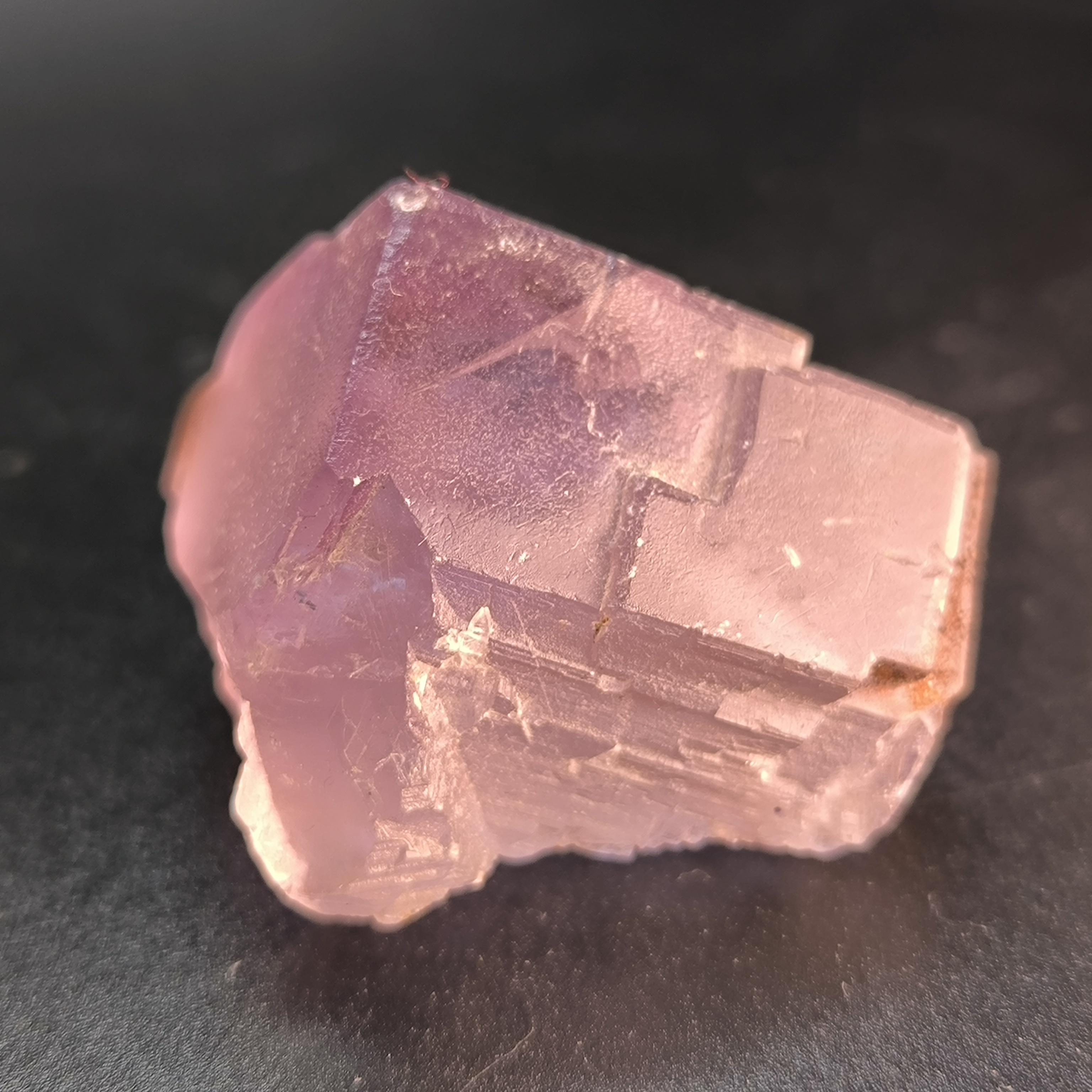
What is fluorite?
Fluorite is calcium fluoride, a common and highly collectable mineral. It is recognised by its simple chemistry, frequent cubic crystal habit, and a colour range that runs from colourless and green to violet, blue, yellow and pink.
Mineralogy and structure
Fluorite belongs to the halides and crystallises in the cubic system. Its perfect cleavage follows octahedral directions, so broken crystals can show triangular faces. At Mohs hardness 4, it is softer than quartz and should be handled with care.
Colour and appearance
Pure fluorite is colourless; trace elements, colour centres and natural radiation create its familiar colours and zoning. Some specimens fluoresce under ultraviolet light, a property that gave fluorescence its name. The effect varies from specimen to specimen and should never be assumed without testing.
Formation and localities
Fluorite commonly forms in hydrothermal veins, especially with lead, zinc, barite and quartz. It also occurs in granites, pegmatites and some metamorphic rocks. Important collector localities include the Rogerley Mine in England, the Illinois-Kentucky Fluorspar District in the United States, Asturias in Spain, and districts in China, Mexico and Namibia.
Use in collections
Sharp cubes, colour zoning, phantoms and fluorescent specimens make fluorite a versatile collecting mineral. Its cleavage and modest hardness mean that display pieces are better protected from knocks than durable minerals such as quartz.