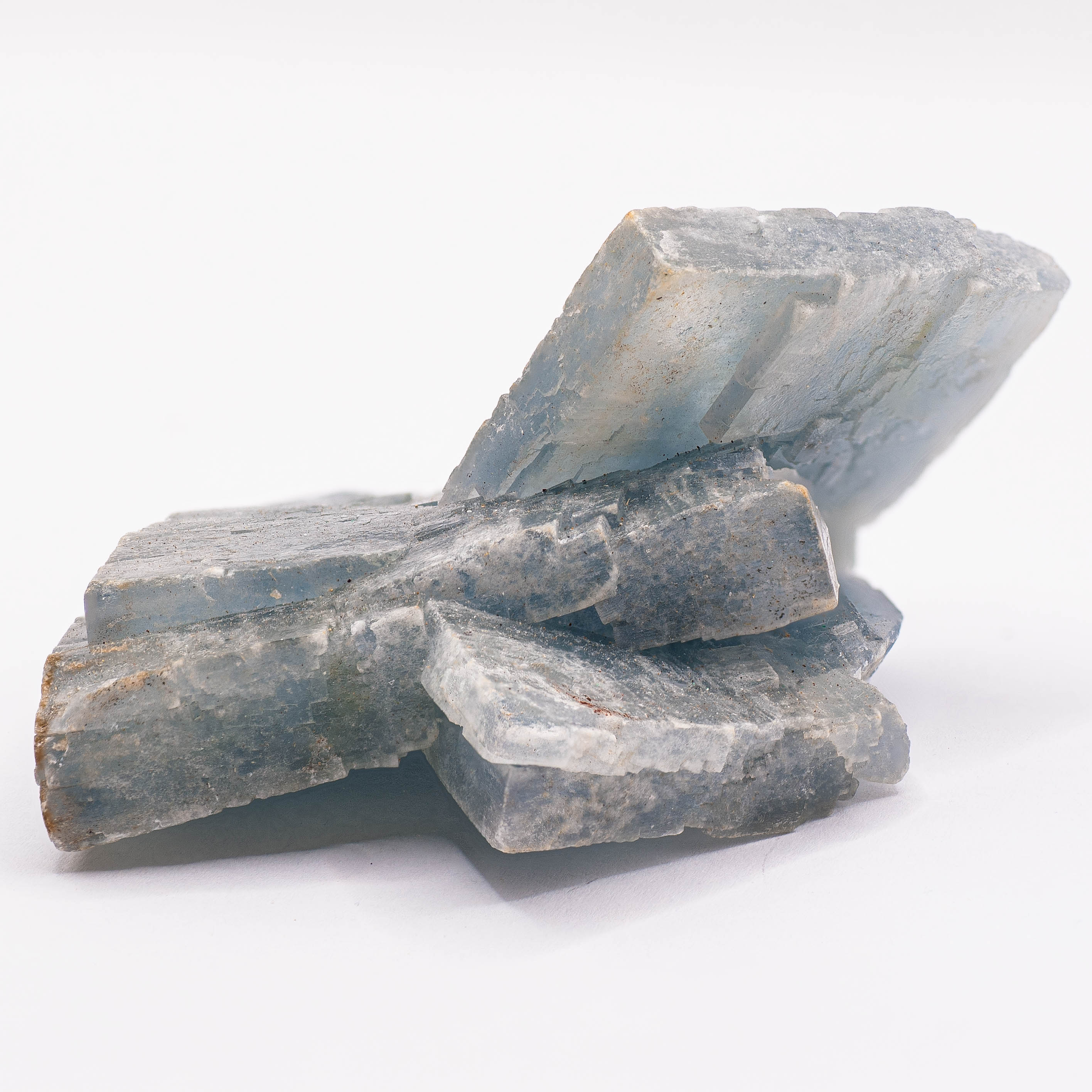
What is barite?
Barite, also called baryte, is barium sulphate and a common mineral in hydrothermal veins, sedimentary rocks and some evaporite-related environments. It is a rewarding collector mineral because it can form sharply bladed, tabular, rosette-like and transparent crystals.
Mineralogy and structure
Barite belongs to the sulphates and crystallises in the orthorhombic system. Its chemical formula is BaSO4; the heavy barium atom gives the mineral its notably high specific gravity of about 4.48. Hardness is approximately 3-3.5.
Colour and appearance
Pure barite is colourless or white, but blue, yellow, brown, grey and pink material is common. Crystal habit varies from broad plates and blades to rosettes, tabular clusters and compact masses. The lustre is usually vitreous to pearly.
Formation and localities
Barite forms from barium-rich fluids in veins, cavities and sedimentary basins. It commonly occurs with quartz, calcite, fluorite, galena and sphalerite. Important collector localities include Morocco, Romania, China, the United Kingdom, Germany, Peru, Canada and the United States.
Collecting and care
Collectors compare barite by crystal shape, transparency, colour, association and locality. It is softer than quartz, so keep sharp blades protected from impact and avoid storing it loose with harder specimens.
Barite and zodiac signs
Popular crystal and birthstone guides sometimes associate Barite with Libra or Aquarius because of its pale colours and layered crystal forms. These associations vary between traditions and are not mineralogical properties.
Symbolic and esoteric associations
In modern esoteric writing, barite may represent balance, clarity and grounded perspective. These ideas can accompany a personal collection or gift description, but there is no reliable scientific evidence for effects on health, energy or destiny.