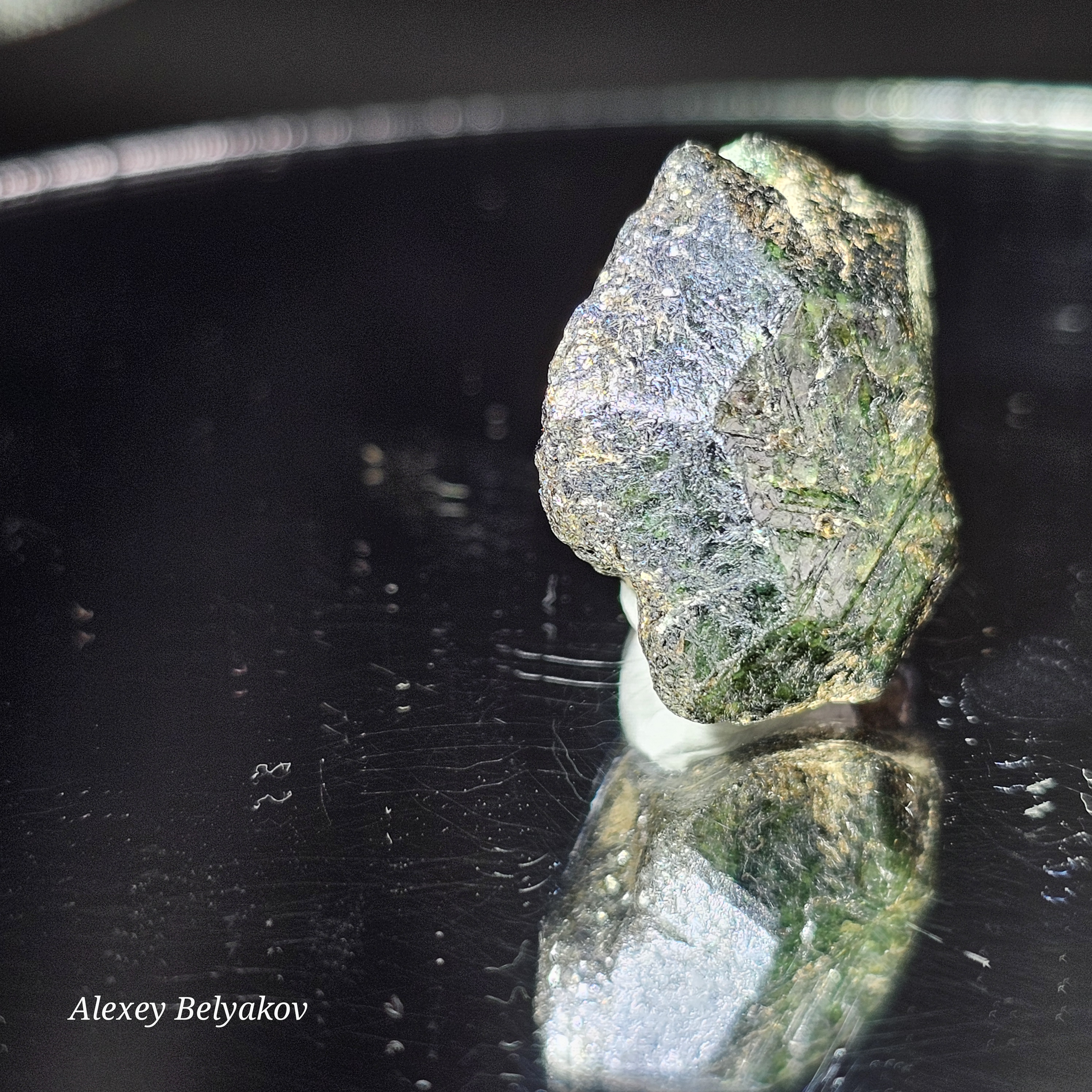
What is alexandrite?
Alexandrite is the chromium-bearing variety of chrysoberyl. Its best-known feature is a colour change: green to bluish green in daylight and red, purplish red or raspberry under incandescent light. The effect depends on the chromium content, lighting spectrum, viewing direction and quality of the individual specimen.
Mineralogy and structure
Alexandrite has the chrysoberyl formula BeAl2O4 and an orthorhombic structure. It belongs to the oxide minerals and has Mohs hardness about 8.5, making it much harder than most ornamental stones. The variety name describes composition and optical behaviour within chrysoberyl, not a separate mineral species.
Colour and appearance
Fine material is transparent to translucent, with a green, blue-green or emerald-like body colour in daylight and a red to purple response in warm artificial light. Cat-eye alexandrite contains oriented inclusions that can produce chatoyancy when cut as a cabochon.
Formation and localities
Alexandrite forms in chromium-bearing geological environments, especially mica schists and pegmatite-related rocks. Historic material came from the Urals in Russia; important modern sources include Sri Lanka, Brazil, Madagascar, Tanzania and India. Locality, treatment history and lighting conditions should accompany any description.
Collecting notes
Collectors compare alexandrite by strength of colour change, transparency, saturation, crystal form and documented locality. Because appearance can vary greatly under different lamps, photographs should state the lighting used rather than imply that one image represents every viewing condition.
Alexandrite and zodiac signs
In popular birthstone and zodiac guides, Alexandrite is often associated with Gemini and Scorpio. These zodiac crystal associations are part of modern spiritual culture and vary between traditions, countries and individual practitioners. They are not a mineralogical classification and should not be presented as a scientific property of the stone.
Esoteric meaning of Alexandrite
Crystal collectors and readers of esoteric symbolism may choose Alexandrite for its colour, texture, locality and personal meaning. In crystal healing and meditation traditions, it may be described with themes such as focus, grounding, protection, calm or confidence, depending on the source. These symbolic interpretations can be useful for storytelling and personal reflection, but there is no reliable scientific evidence that a mineral changes health, energy, luck or destiny.
Choosing Alexandrite as a birthstone or symbolic crystal
When choosing a Alexandrite birthstone, zodiac crystal or spiritual gift, compare the actual specimen: natural colour, crystal habit, transparency, inclusions, locality and condition. A mineral guide is more reliable when symbolic associations are kept separate from tested physical properties and from the description of an individual piece.